Já, Které Neznám
1 October – 20 November
- Artists
- Ivan Pinkava, Martin Gerboc, Martin Gebert
- Curators
- Kristýna Jirátová
- Location
- Vodičkova 37
Three artists, three different artistic languages, three approaches to the representation of the face. Despite their visual differences, the selected works by Martin Gerboc, Ivan Pinkava and Martin Gebert communicate remarkably well with one another. The face is, after all, one of the central themes in the work of all three artists. The face, which is the most legible and yet the most complex part of the human body. In the face, we can encounter another person in their complete nakedness, vulnerability and openness, but also entirely concealed beneath a veil of conscious pretence or a protective mask. We can read many things in the faces presented in this exhibition; we can learn much here about the artists themselves, but also about ourselves. The title of the exhibition, JÁ,KTERÉ NEZNÁM, refers to something that exists beneath the mask of our own face, to someone who is in our constant proximity, yet whom we are still searching for. A peculiar state of abandonment, silence (which can also scream) and, above all, intimacy are shared by the three exhibiting artists. What differs, however, are the ways in which they communicate their messages.
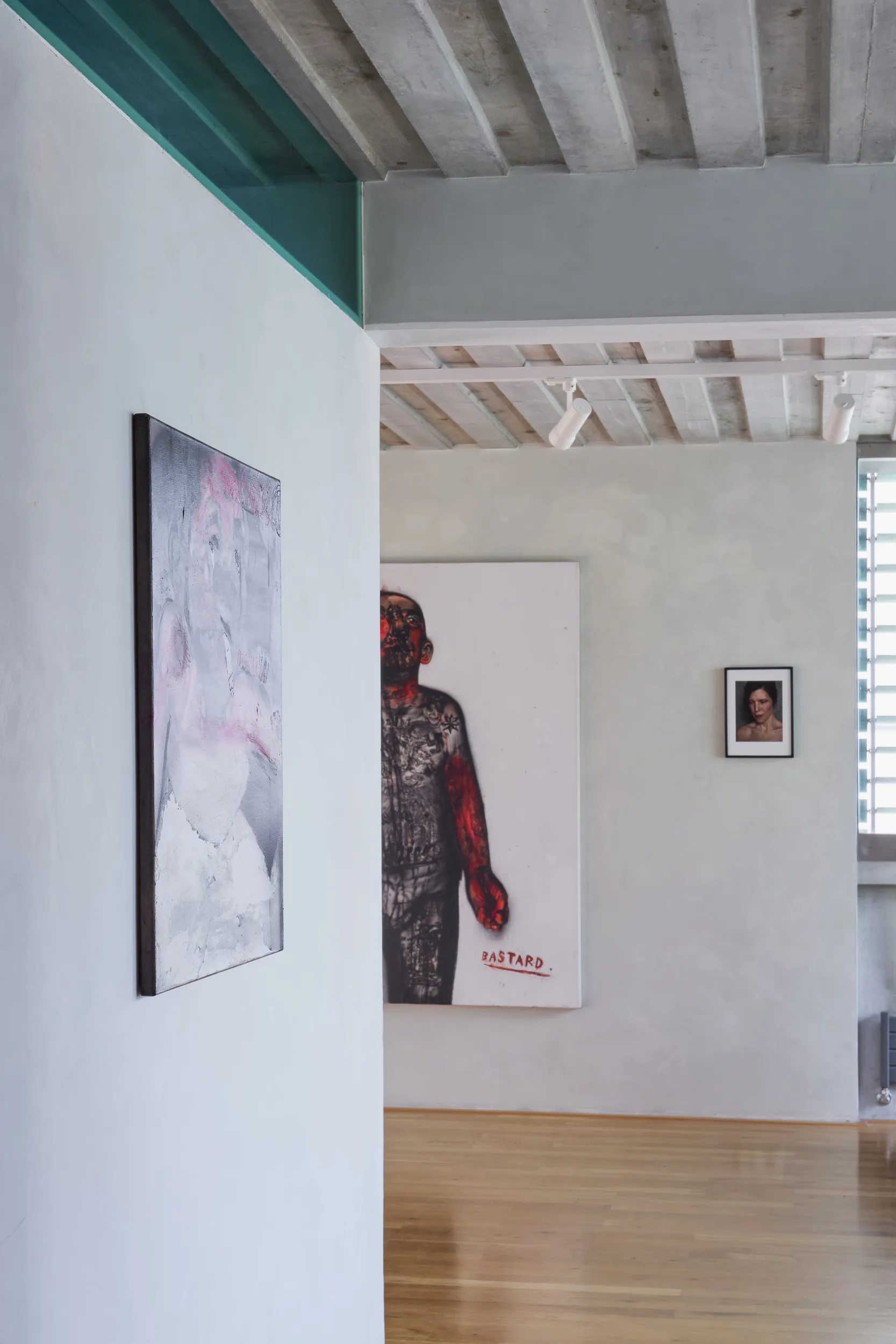
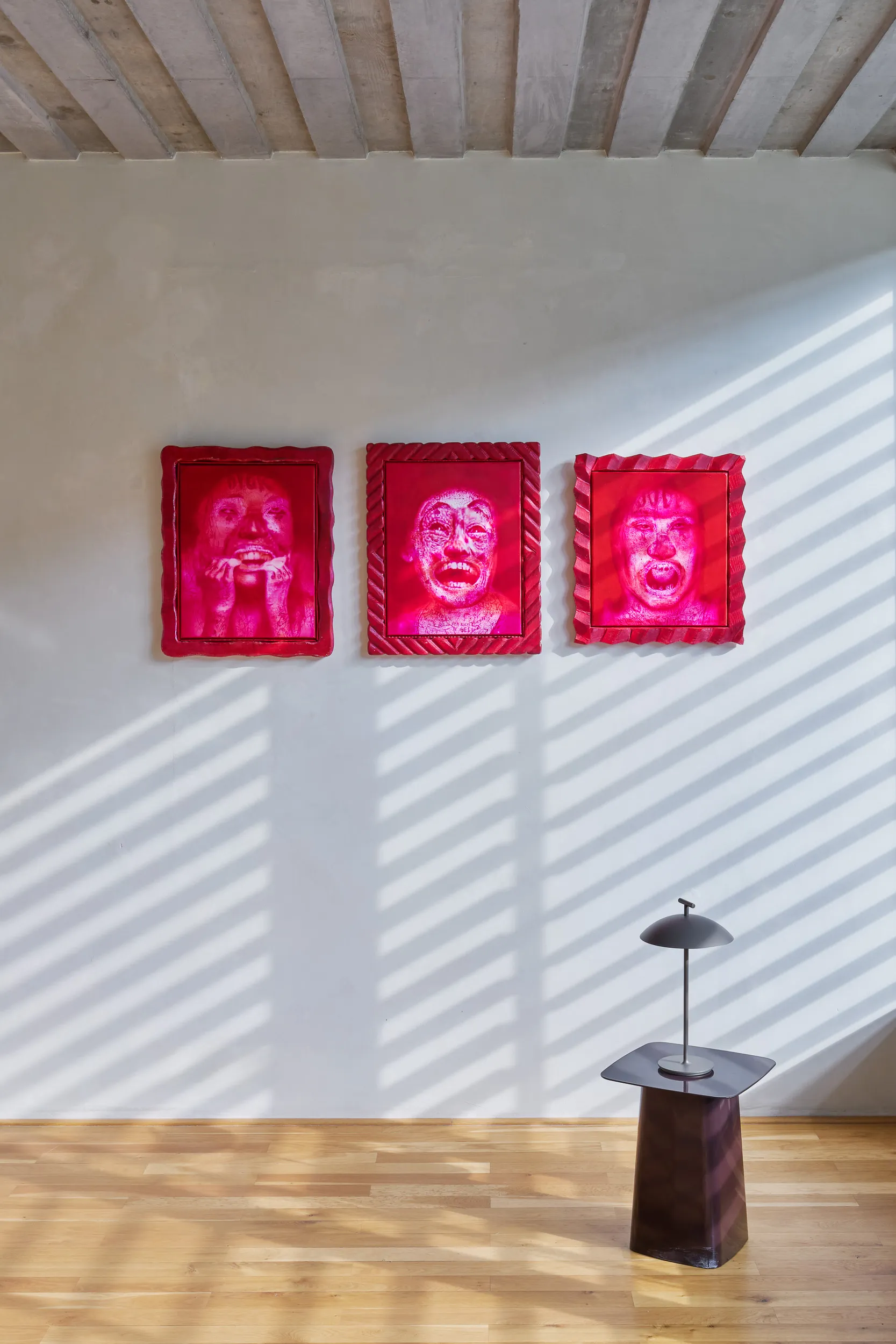
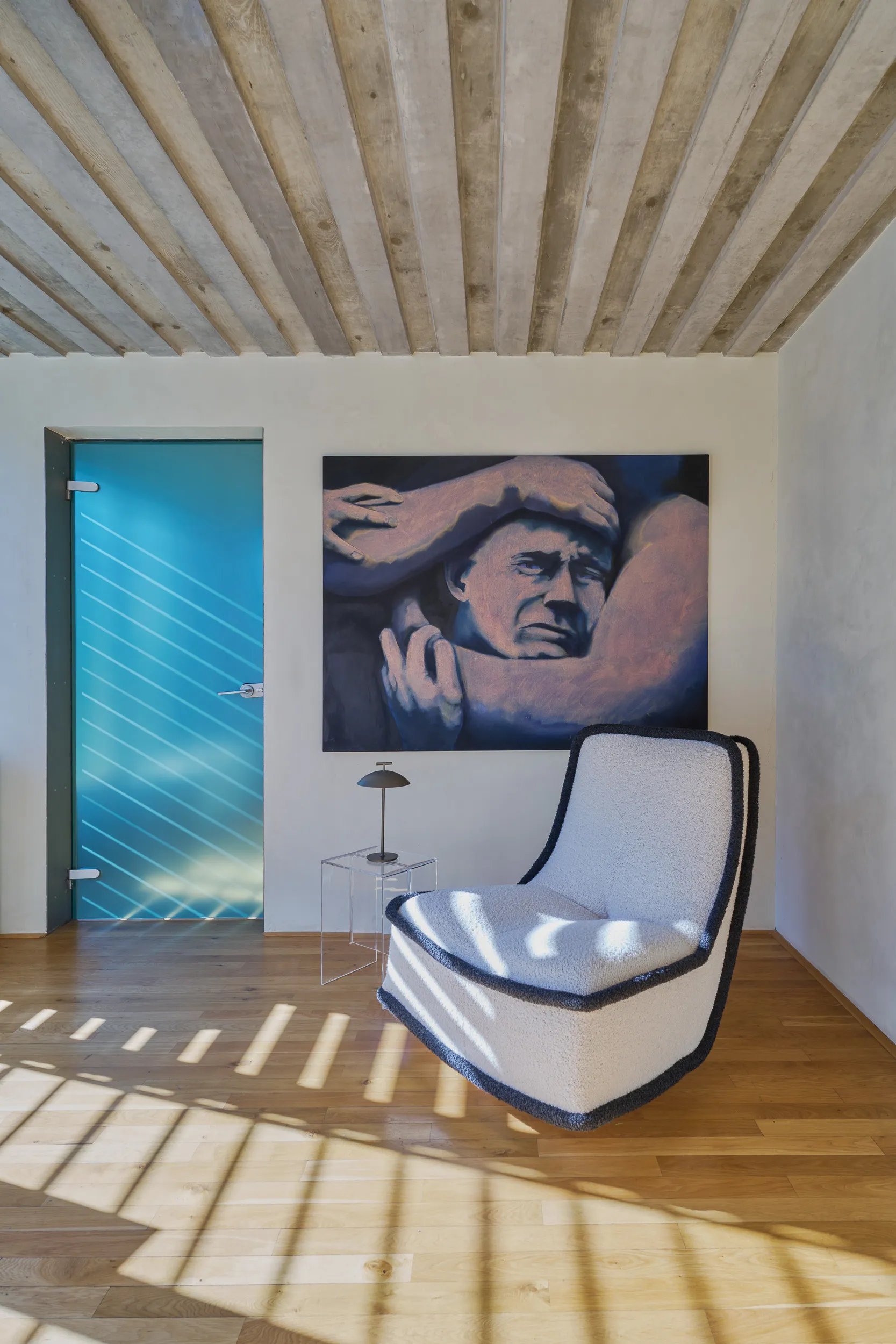
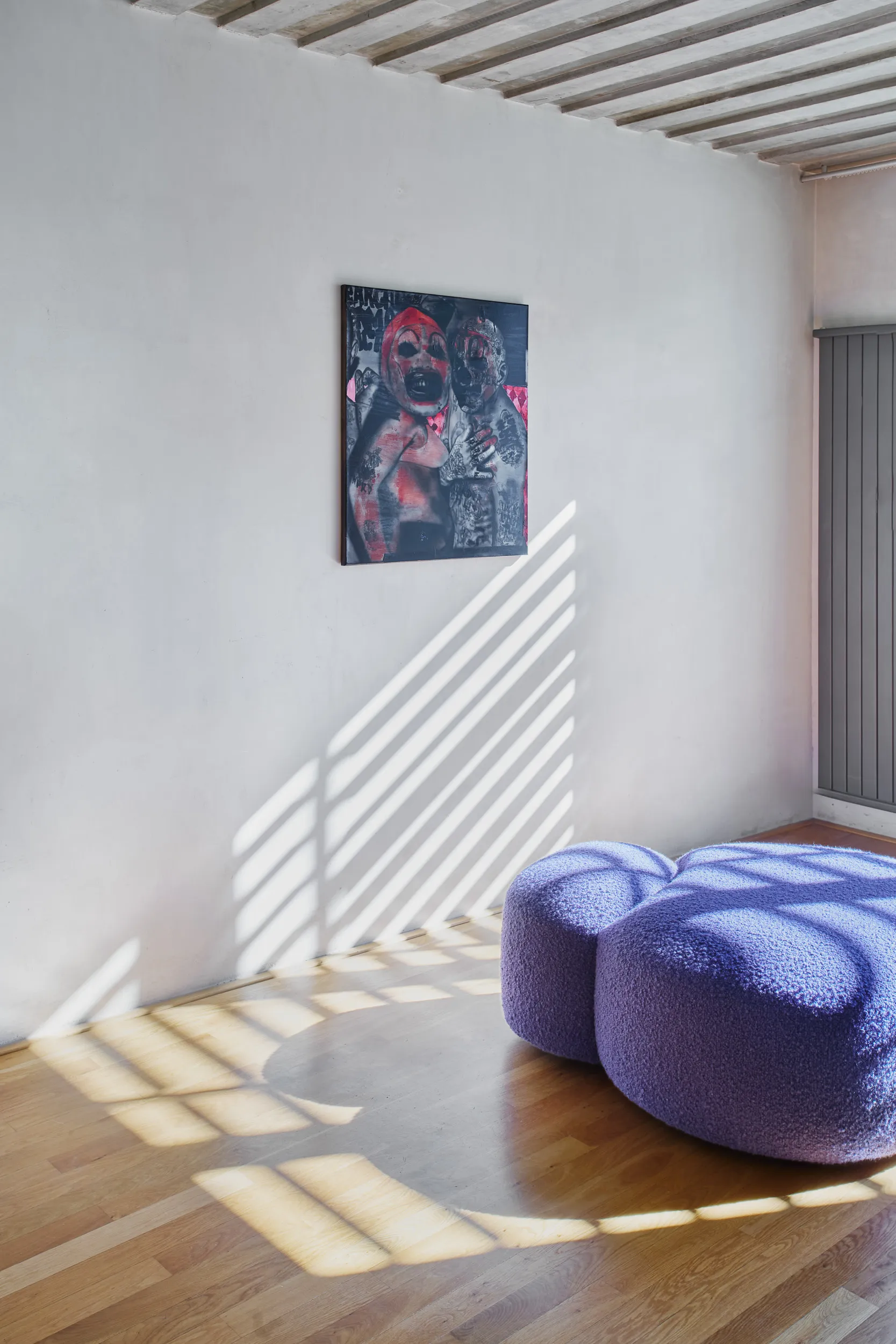
Martin Gerboc presents himself in his paintings in a cruel dialogue with himself, condemned, together with the viewer, to confront his own mercilessly fixed gaze. A gaze that is both superior and uncertain, moving and capable of laughing and crying at the same time. Although the artist does not appear here under his own face, we witness his utter nakedness, his most personal and intimate confession. The heavily caricatured faces in the series of small red paintings are nothing other than self-portraits. It is as if the artist had sat down in front of a mirror, gradually revealing his various guises, characteristics and emotions. He does so without mercy: individual figures grimace, scream, laugh hysterically and cry out for help. We do not know what to expect from these devilish faces, yet at the same time we are able to identify with them in a deeply painful way. Martin Gerboc’s paintings have the power to awaken profoundly personal states within the viewer, states in which we either find the strength to remain or flee immediately in horror. In the tapestry entitled King Liar, the artist—this time in his own likeness—appears with a long nose, alluding to the story of Pinocchio, the puppet who comes to life. It recalls the fate of a boy who, in his naivety, allows himself to be tempted by bad companions, leads an idle life and, in the original version of the story, even meets a rather cruel death at the hands of his wicked associates. The long nose, a consequence of bad behaviour, is complemented in the tapestry by an injured, bandaged hand, while the overall composition, dominated by a prominent floral motif, points towards transience and the eternal call of death. Ivan Pinkava employs a similarly characteristic approach to corporeality, one also found in Gerboc’s work, in which the body, through gesture and facial expression, primarily conveys its own emotions.
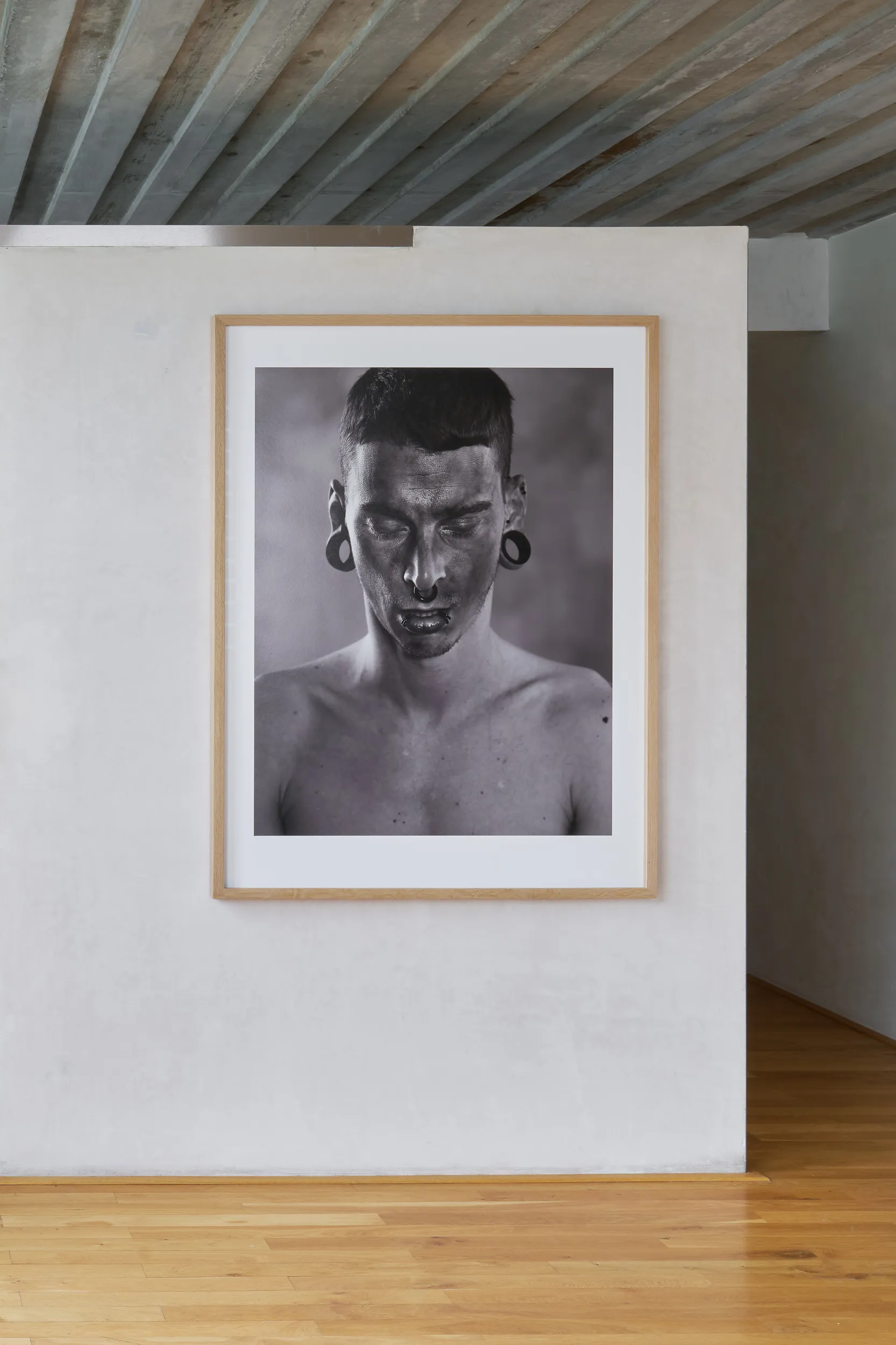
Ivan Pinkava neither portrays nor interprets his models; instead, he uses another person’s body and face as a projection screen for his own inner experiences. The choice of model is of great importance to him, since the more sensitivity he finds in a person, the more deeply he can enter into their truly intimate experience, strip away their external façades and protective armour, and reveal their pure beauty, fragility and vulnerability. The thoughts he subsequently interprets through these individuals reflect the artist’s broader view of the world. His photographs are therefore a form of self-portraiture, offering such a wide-ranging statement that we can identify with them quite naturally. The faces presented here convey a multitude of messages, both personal and universal. These include, for example, the difficulty of accepting one’s own appearance, including the signs of ageing, fear of the outside world, or the search for security through extravagant alterations to the body itself, reflecting both an attempt to strengthen self-confidence and a means of protecting oneself against one’s own vulnerability. Closed eyes are a recurring motif in Pinkava’s photographs. They may allude to fear and death, but also to positive visions of something yet to come. Franta, too, has his eyes closed in the large-format photograph displayed in the exhibition opposite an object containing a framed piece of foam. The foam originally served as a backdrop for this and numerous other photographs, making it a kind of ironic remnant bearing traces of endurance and time, scars that gradually appear on the human body in a similar way. The foam, now presented as an independent artefact stripped of the subjective features of the human figure, functions here as an absolute universalisation of human existence.
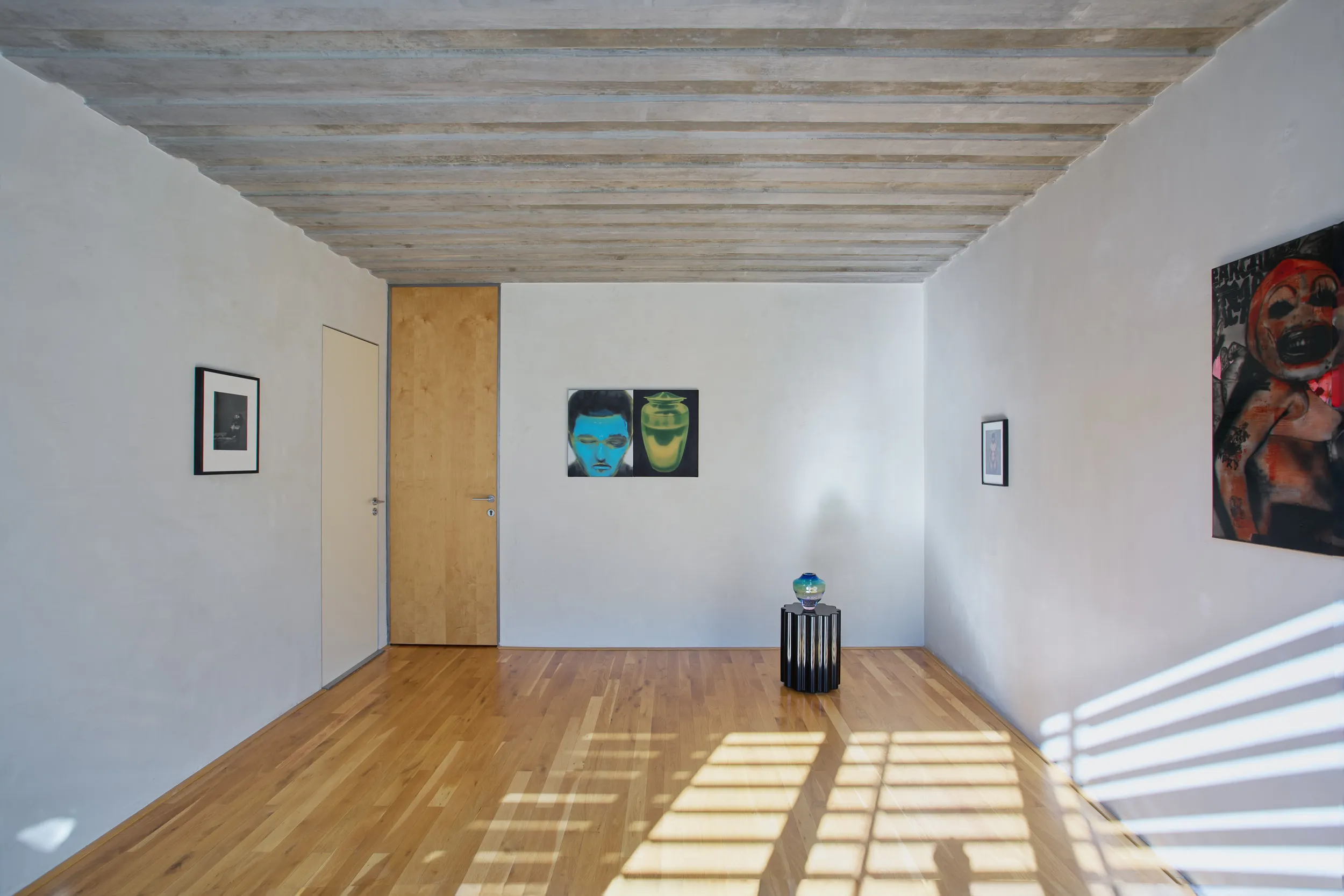
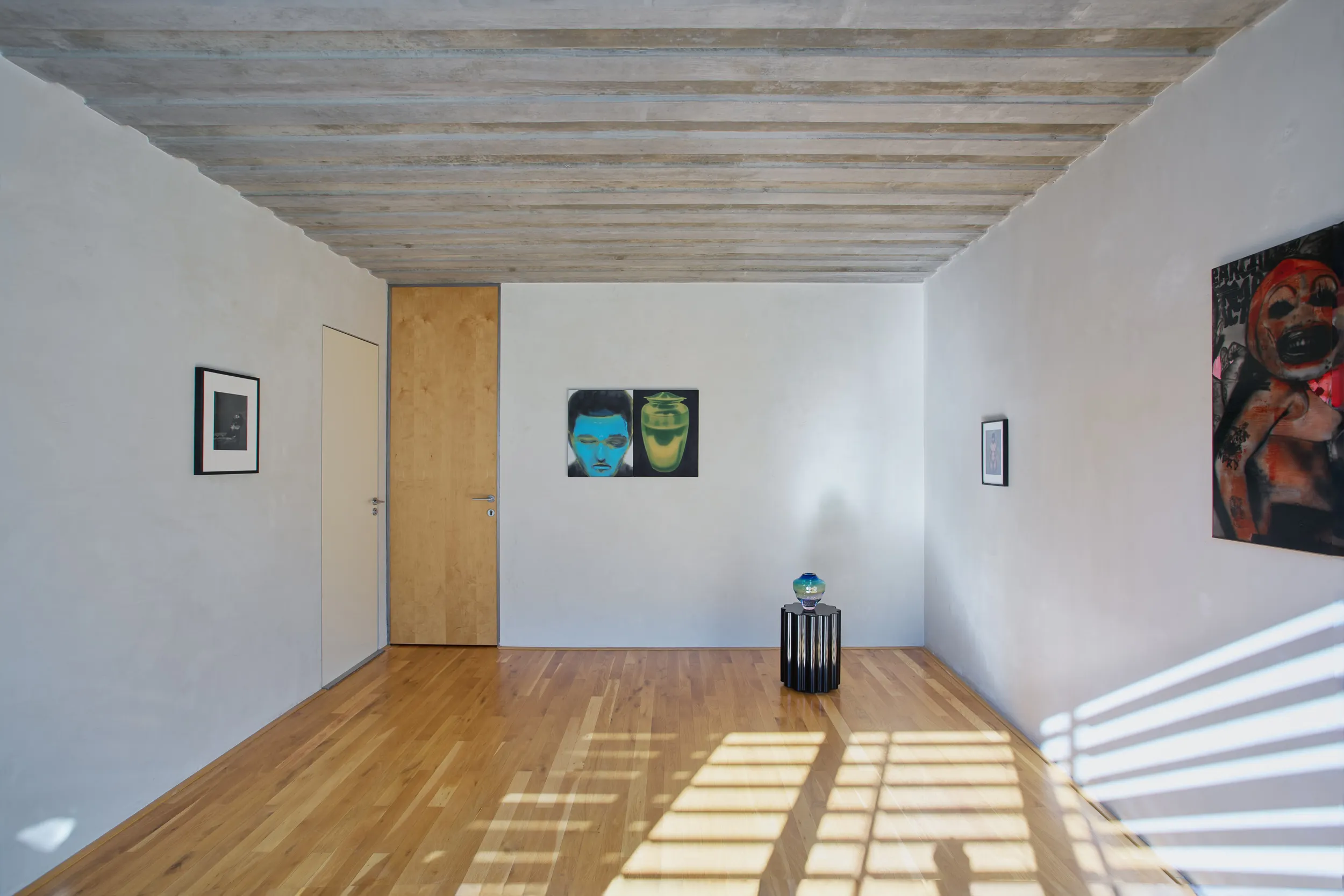
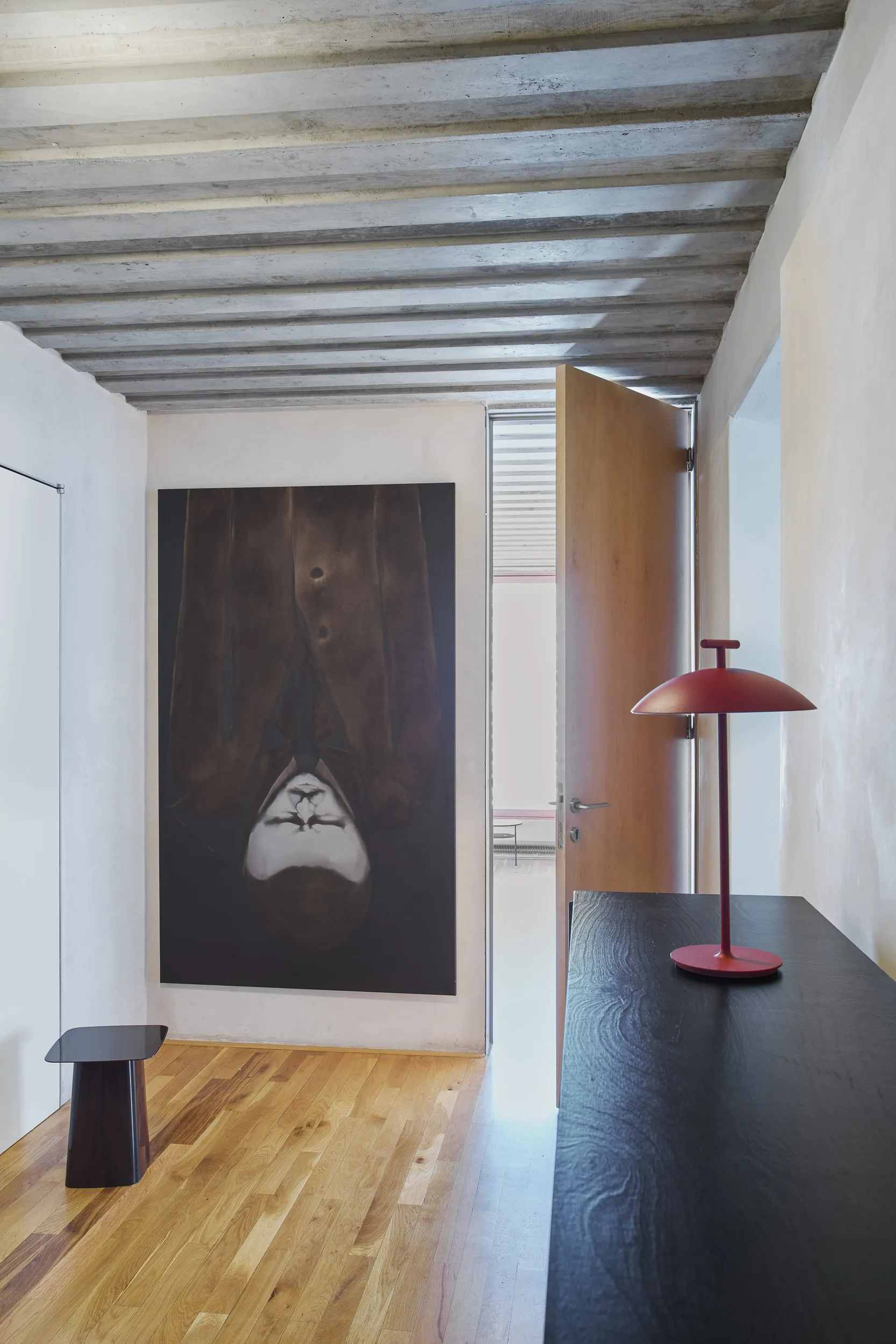
While Ivan Pinkava seeks to convey a broader, more universal statement through the faces in his photographs, Martin Gebert uses the face to explore questions of identity in the interplay between the self and society. Although many of his paintings bear the artist’s own likeness, the face is conceived primarily as a universal model of the human face, reflecting the relationship between external appearance and inner experience. Through these expressive faces, Gebert asks to what extent a person’s identity stems from their inner nature and to what extent it is shaped by society and the opinions of others. A theme he explored in his diploma thesis, “I Carry All the Names That Have Been Given to Me” (2026), continues to develop in his recent paintings, in which a face often gazes at us from an extremely close distance. As we look into the eyes of the figures, always painted en face, we gradually become immersed in our own feelings and emotions. At a certain point, we may experience a strong urge to avert our gaze, along with the sense that the other person facing us wishes to do the same. Yet they are cruelly trapped in their uncomfortable position. Martin Gebert’s work also focuses on the question of masculinity, the position of men in today’s world and the tensions surrounding contemporary perceptions of manhood in confrontation with long-established, socially ingrained patterns. His paintings present both sides of masculinity: one that is harsh, even aggressive, and another that is fragile and tender. Beneath a façade of aloofness and masculinity, deep compassion and delicate emotions are often concealed. Once again, everything depends on the individual interpretation of the viewer, who—as suggested above—interprets, defines and assigns roles. From the painter’s perspective, identity in general is therefore a process shaped by complex relationships and mutual interactions between the individual and their surroundings.
The motif of closed eyes, as well as the image of an urn, once again refers to the theme of death in Gebert’s work, connecting all three artists. All three also work not only with the face but with the entire figure, with the body and its gestures. The figures and faces in the paintings of Martin Gerboc and Martin Gebert, and in the photographs of Ivan Pinkava, are deeply intimate self-portraits of their creators, while simultaneously functioning as projection screens for the viewer’s own experiences and emotions. They are mirrors that reveal both their creators and the person reflected within them.

The title of the exhibition, JÁ,KTERÉ NEZNÁM, refers to something that exists beneath the mask of our own face, to someone who is in our constant proximity, yet whom we are still searching for. A peculiar state of abandonment, silence (which can also scream) and, above all, intimacy are shared by the three exhibiting artists. What differs, however, are the ways in which they communicate their messages.

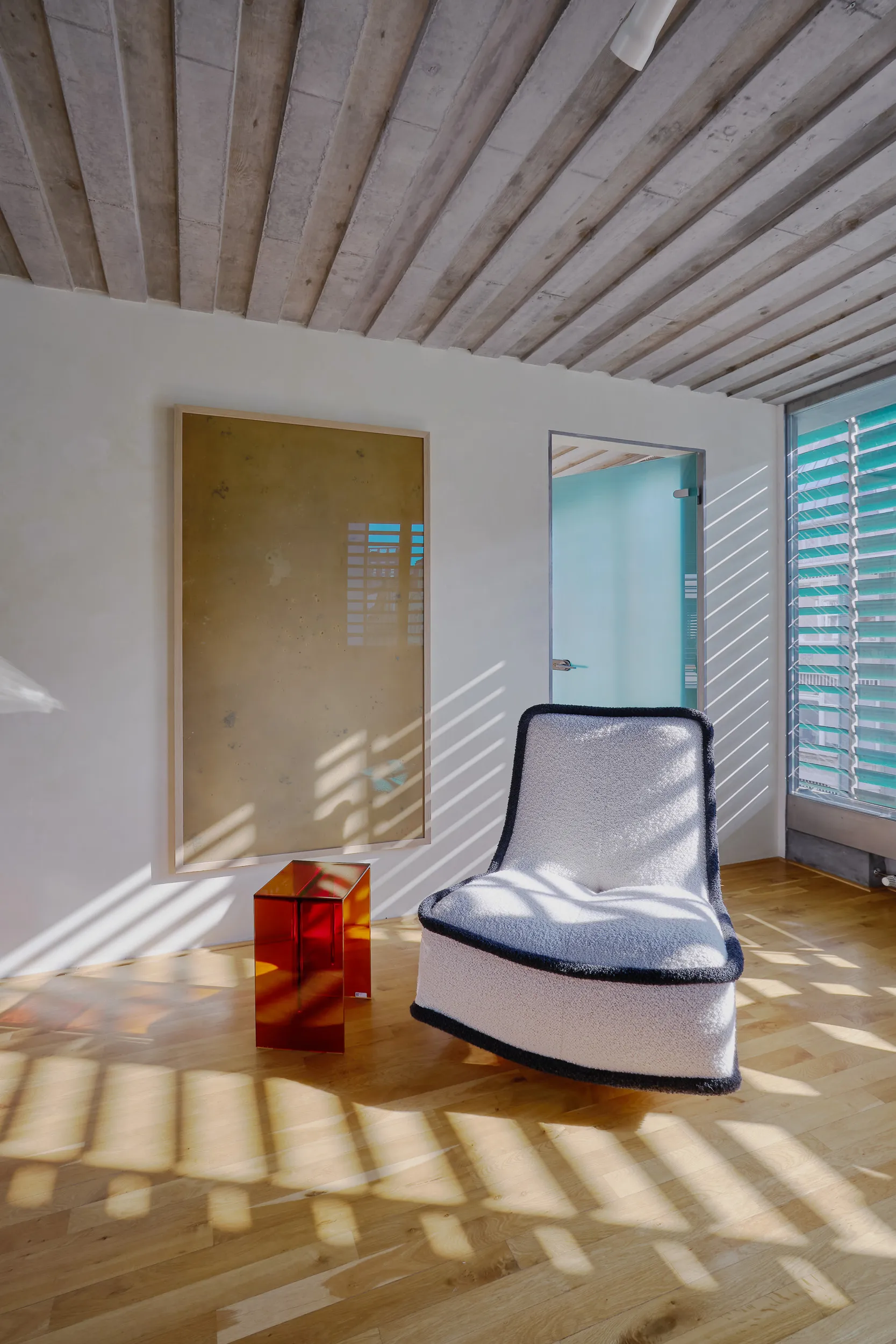
Featured Works
-
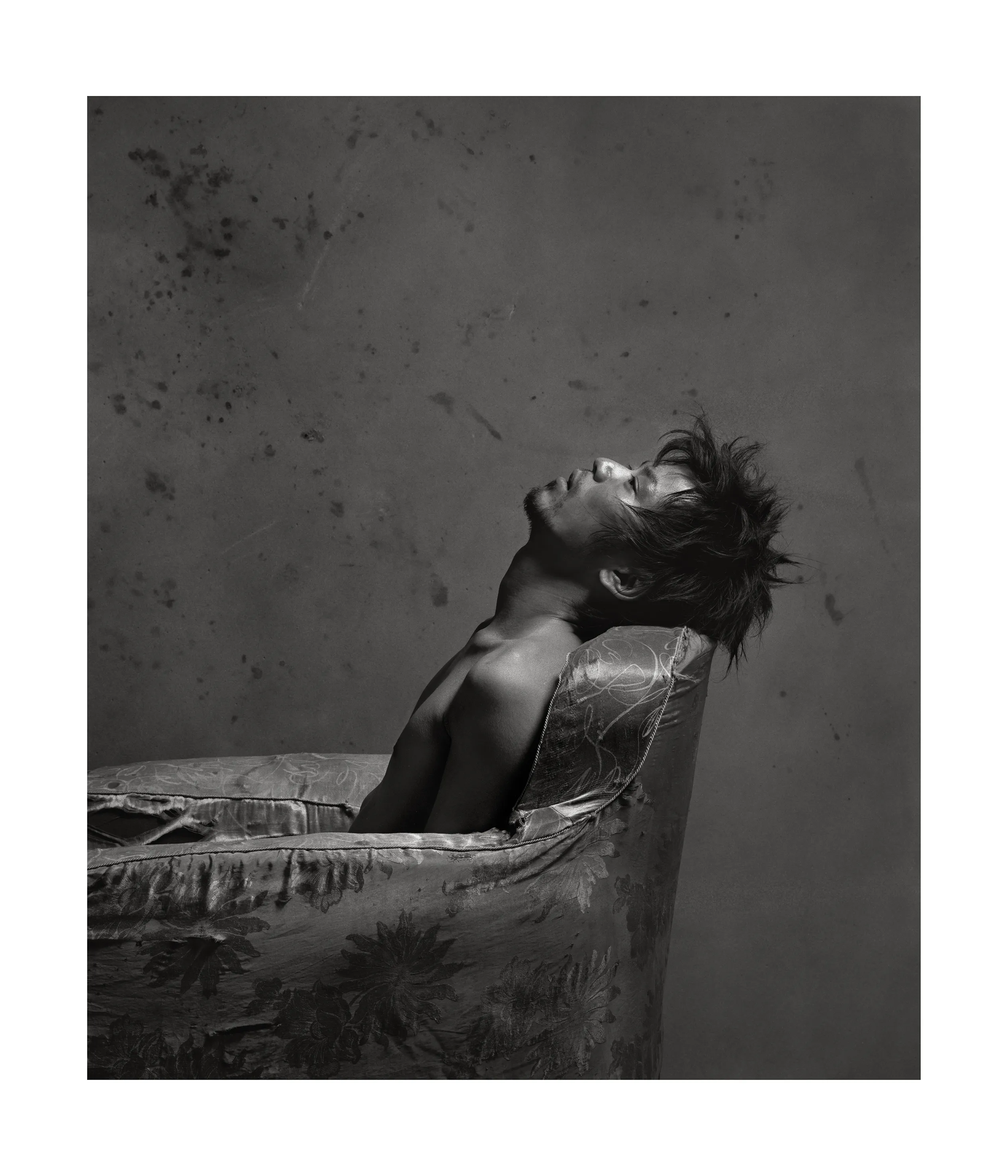
Ivan Pinkava Marat
EnquireIvan Pinkava Marat
-

Ivan Pinkava Anna
EnquireIvan Pinkava Anna
-

Ivan Pinkava Boy(Franta)
EnquireIvan Pinkava Boy(Franta)
-
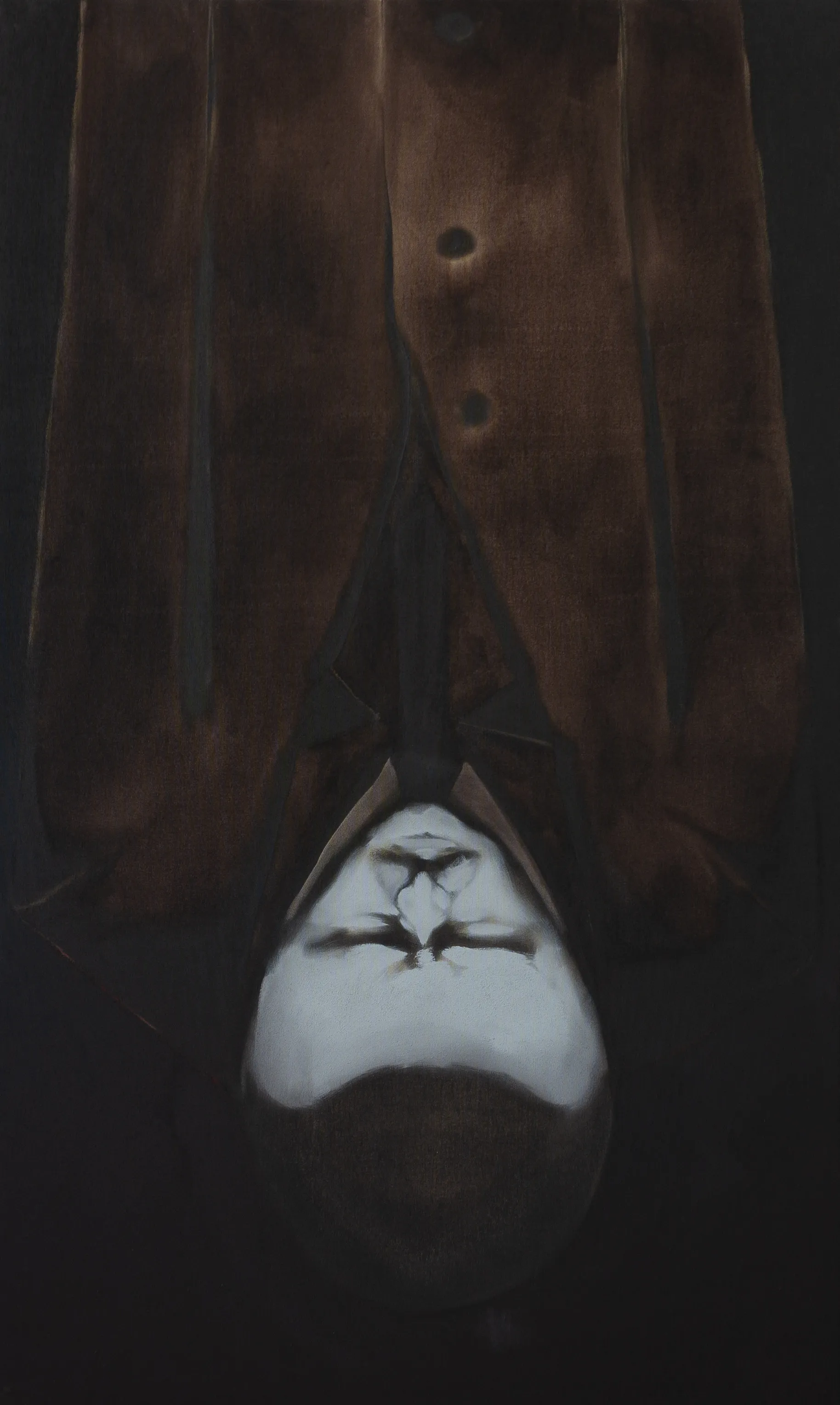
Martin Gebert NEBOŽTÍK
EnquireMartin Gebert NEBOŽTÍK
-

Martin Gebert UNTITLED
EnquireMartin Gebert UNTITLED
-

Martin Gerboc "Bastard"
EnquireMartin Gerboc "Bastard"
Artefacts
-
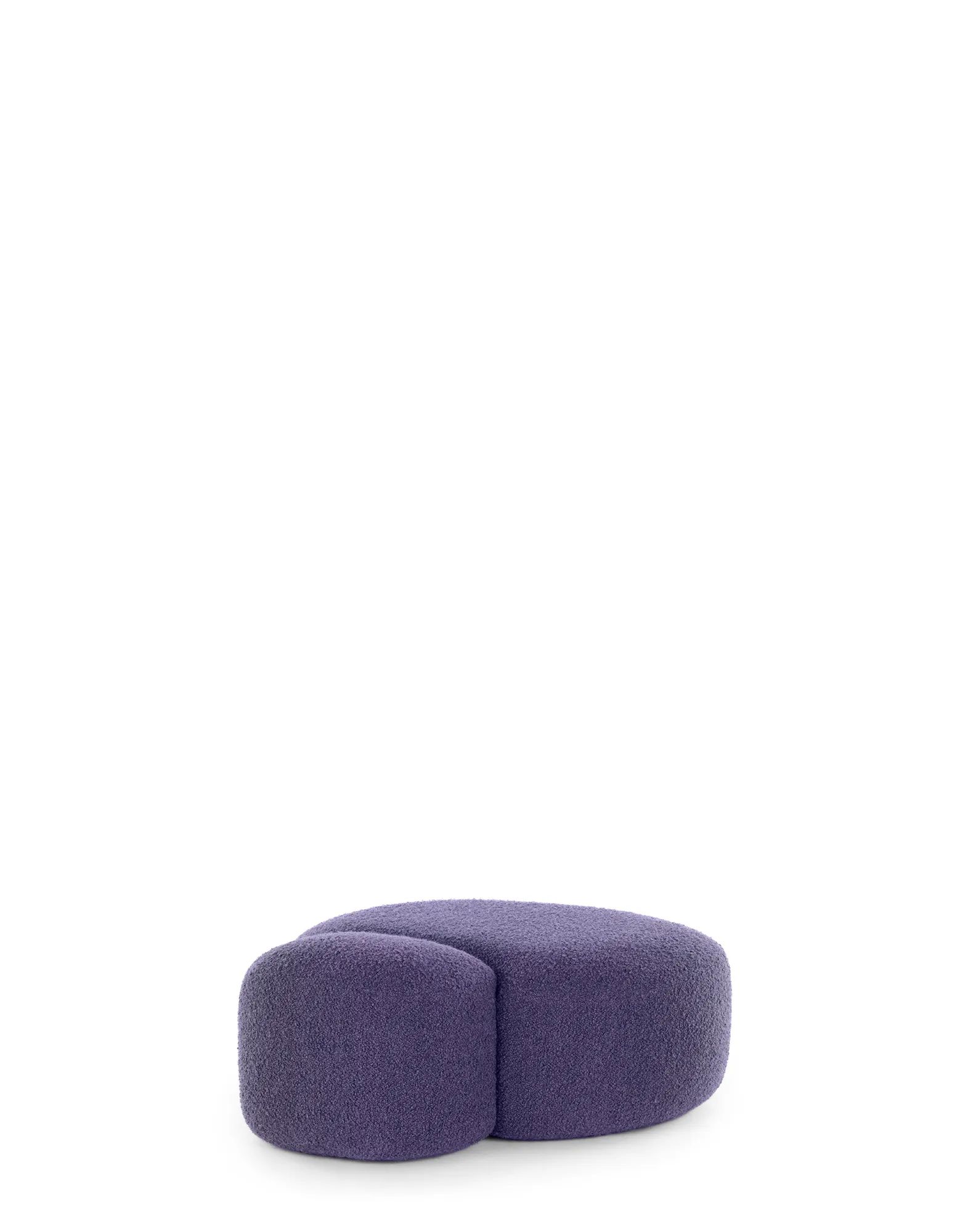
Kartell, design by Patricia Urquiola AALAND pouf
EnquireKartell, design by Patricia Urquiola AALAND pouf
-

Kartell Colonna
EnquireKartell Colonna
-
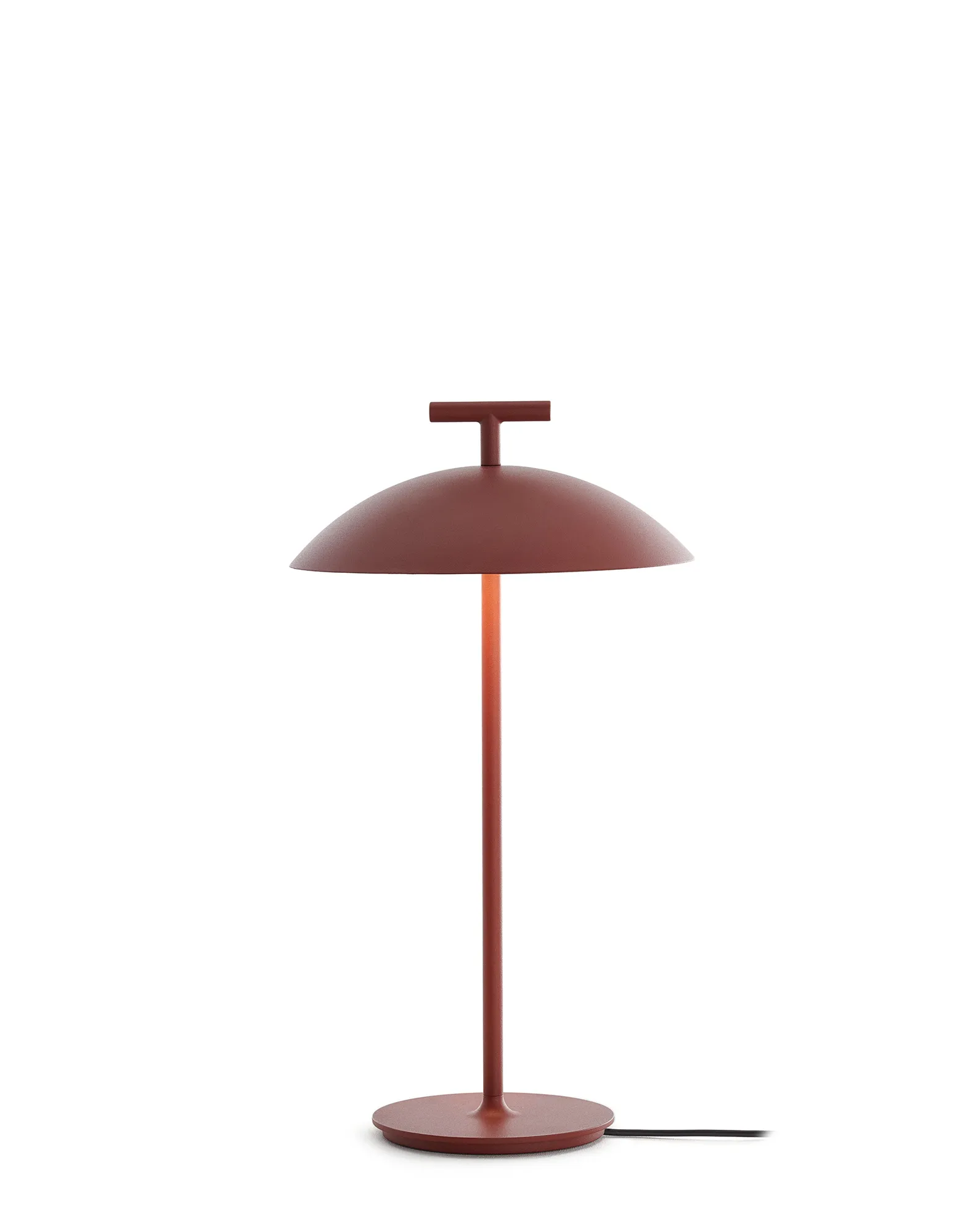
Kartell Mini Geen-A table lamp
EnquireKartell Mini Geen-A table lamp
-

Knoll Womb chair
EnquireKnoll Womb chair
-
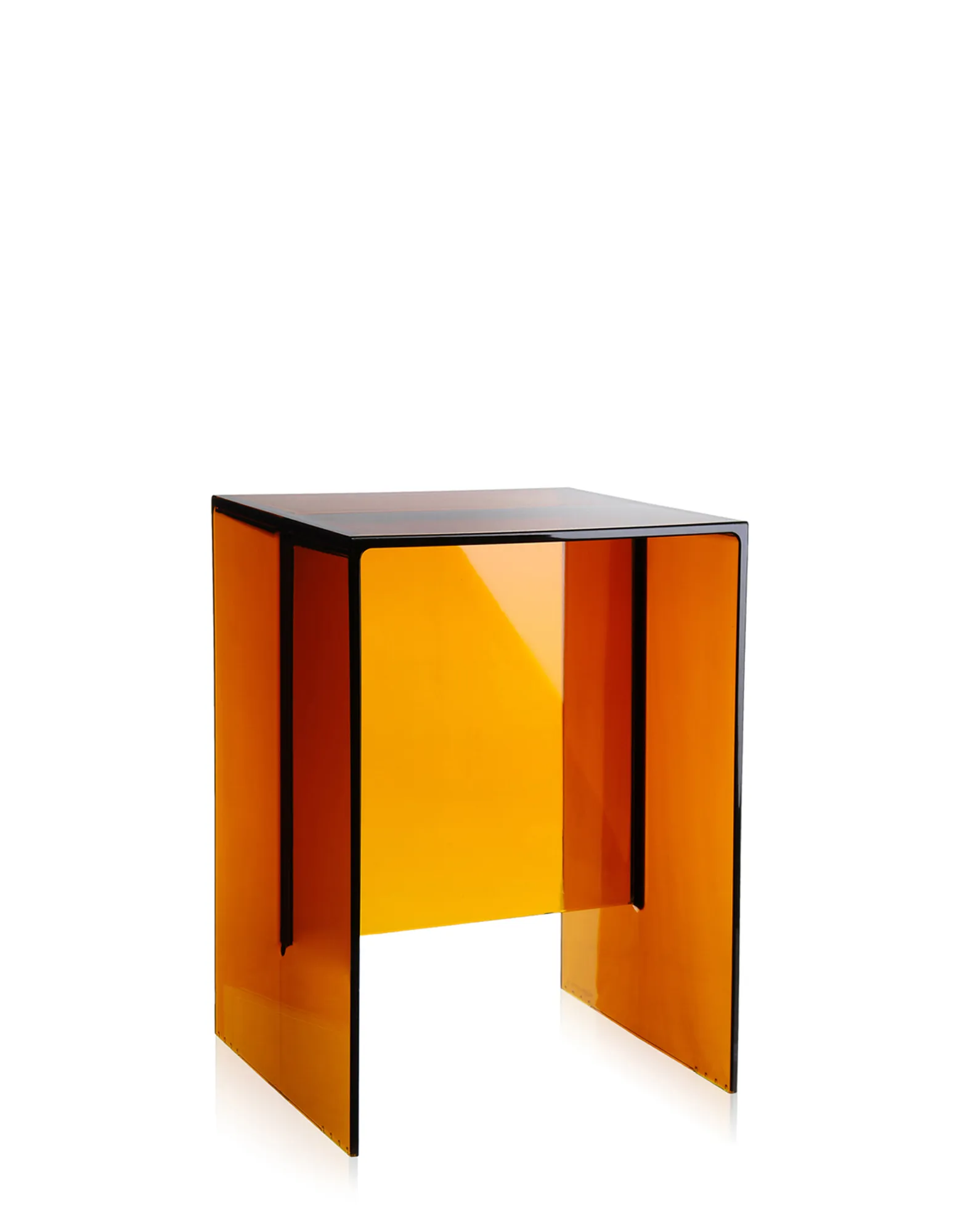
Kartell Max-Beam side table
EnquireKartell Max-Beam side table
-
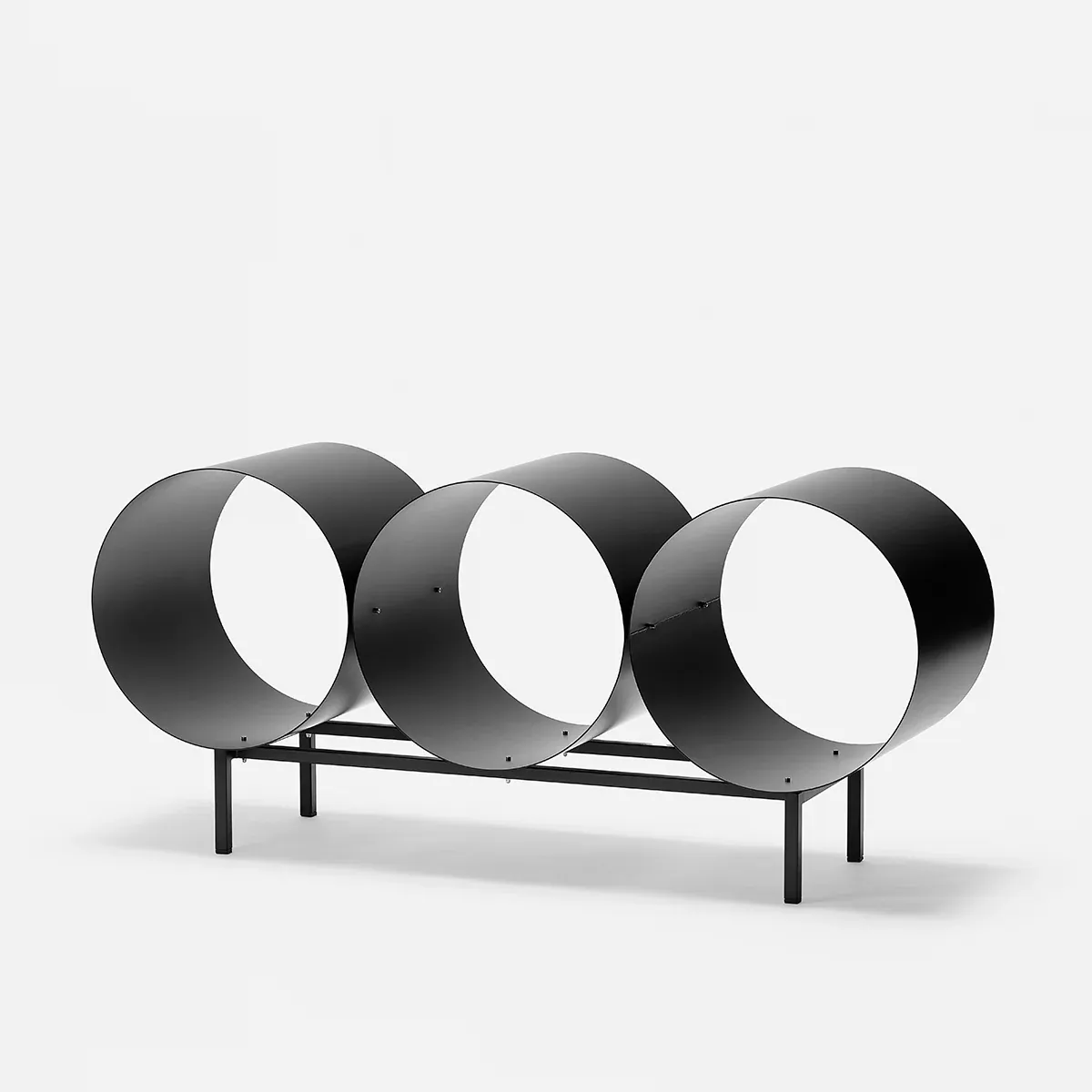
Master & Master Barrel
EnquireMaster & Master Barrel