Tender Blue
23 April – 24 June
- Artists
- Aleš Brázdil
- Curators
- Michaela Mellová
- Location
- Vodičkova 37
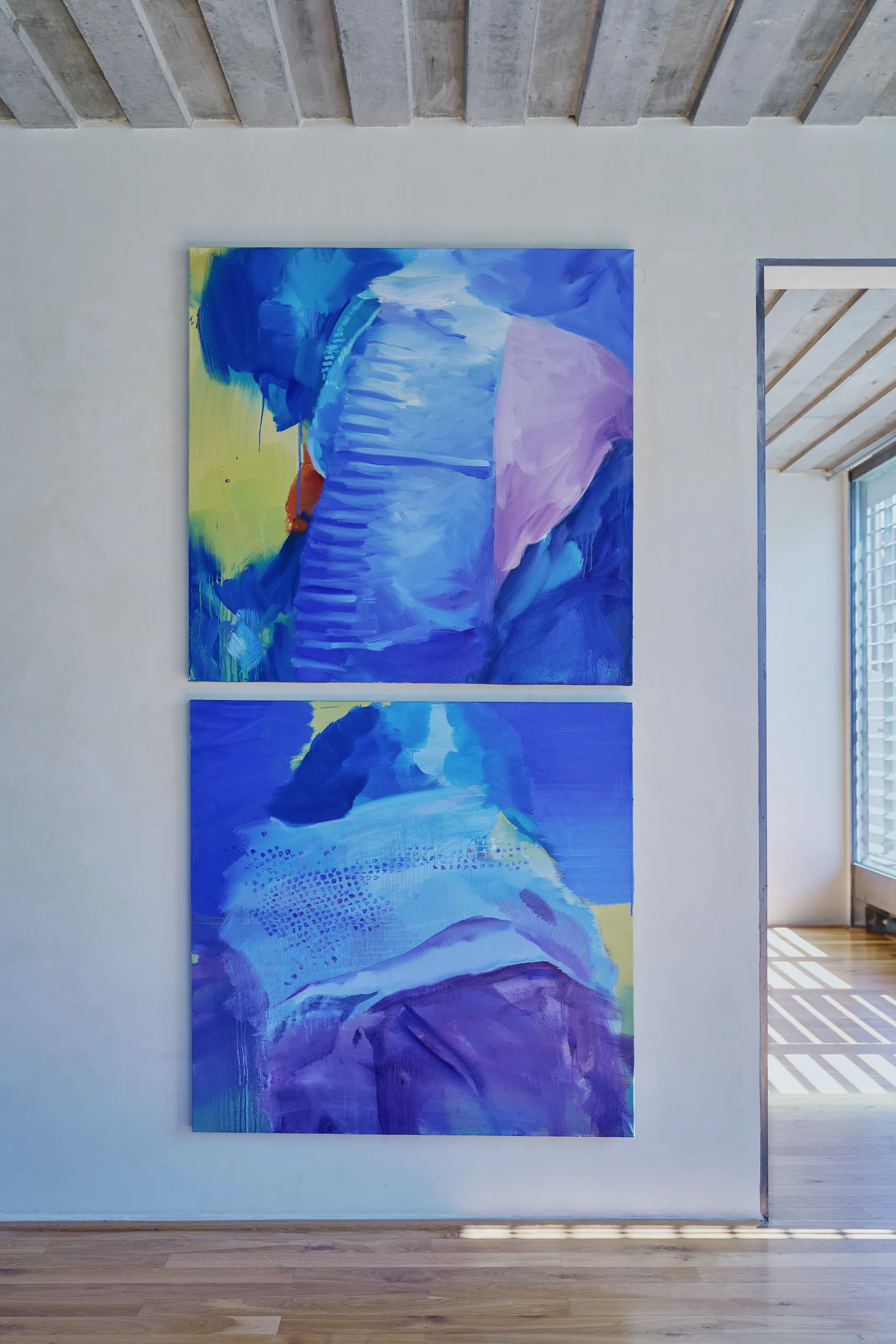
The starting point for this series is Satantango, the novel by László Krasznahorkai and its film adaptation by Béla Tarr. A haunting work of total disintegration, nihilism and helplessness, it portrays the inhabitants of a decaying Hungarian village who wait in vain for salvation, gradually succumbing to lies and their own apathy. It is a world trapped in a closed circle, with no way out. Aleš Brázdil draws on this world, yet shifts his attention to the one figure who seems to exist within it differently.
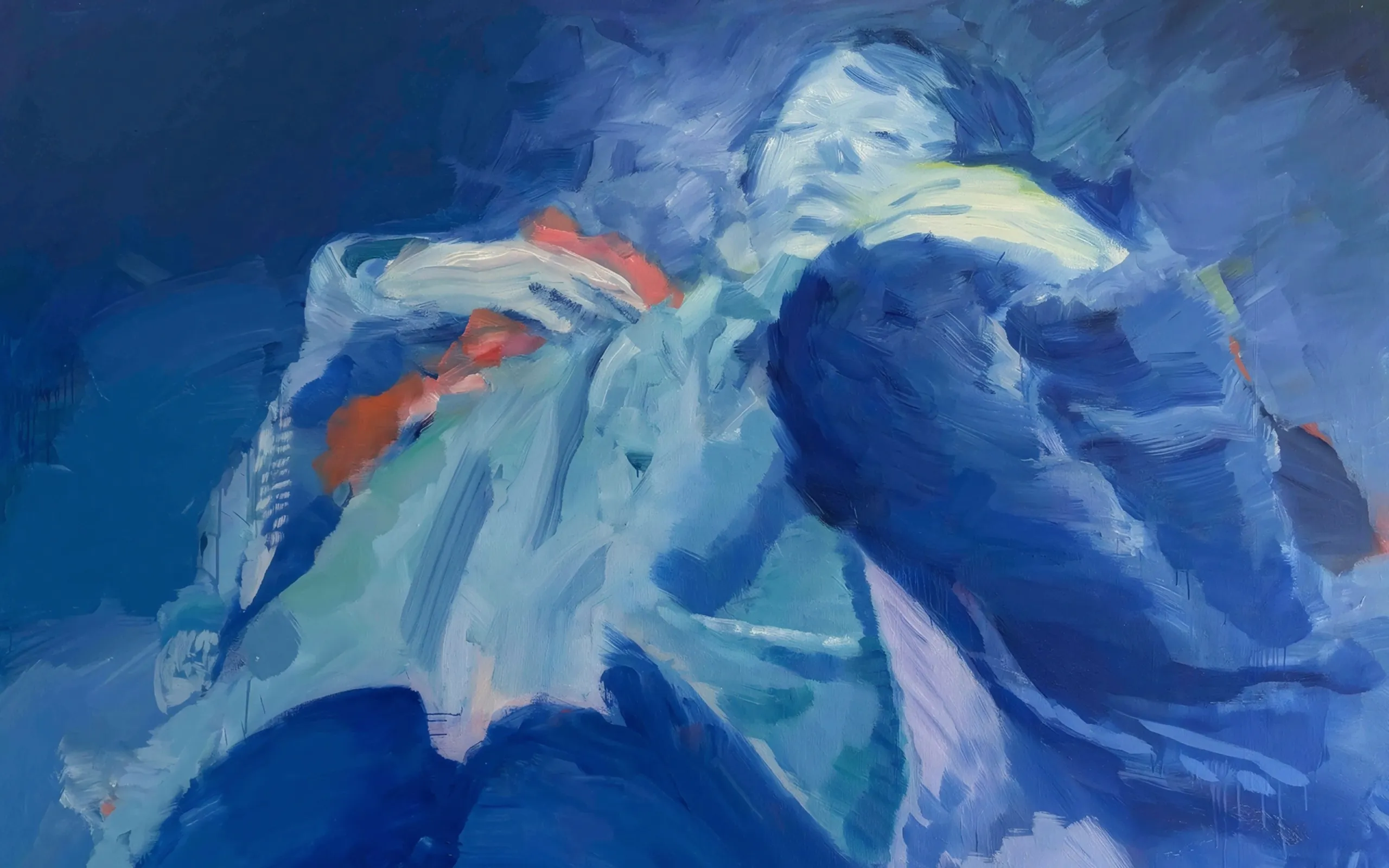
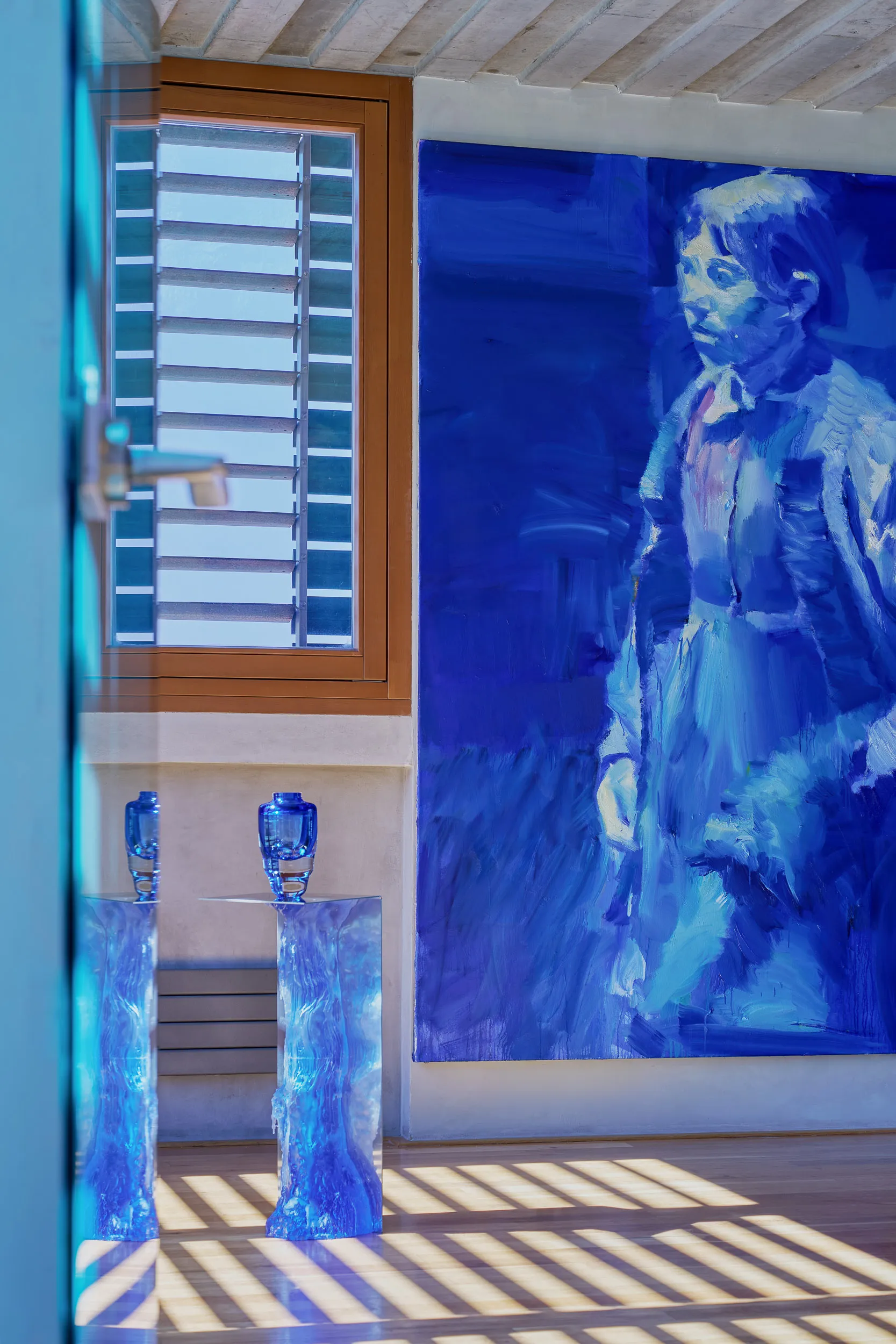
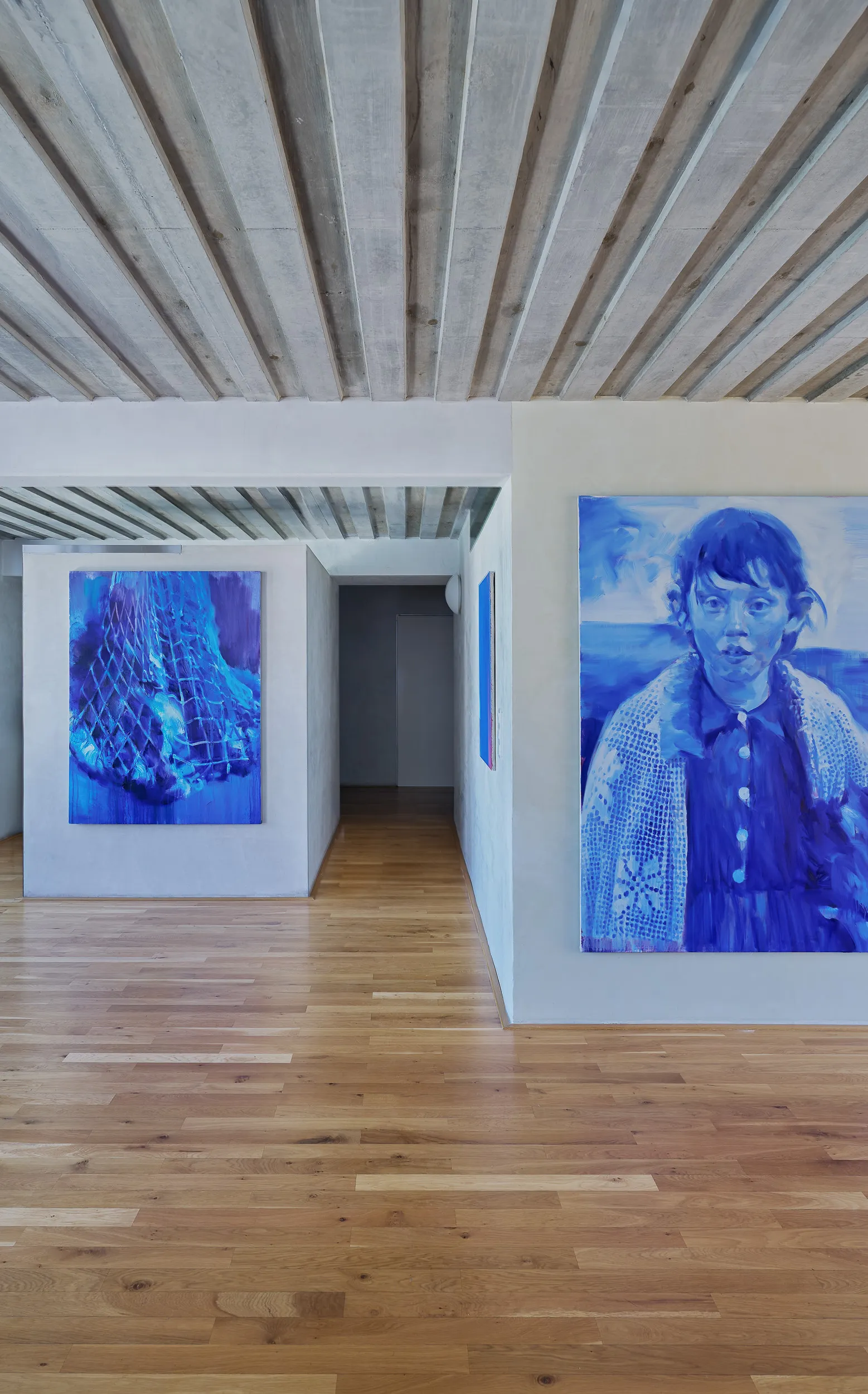
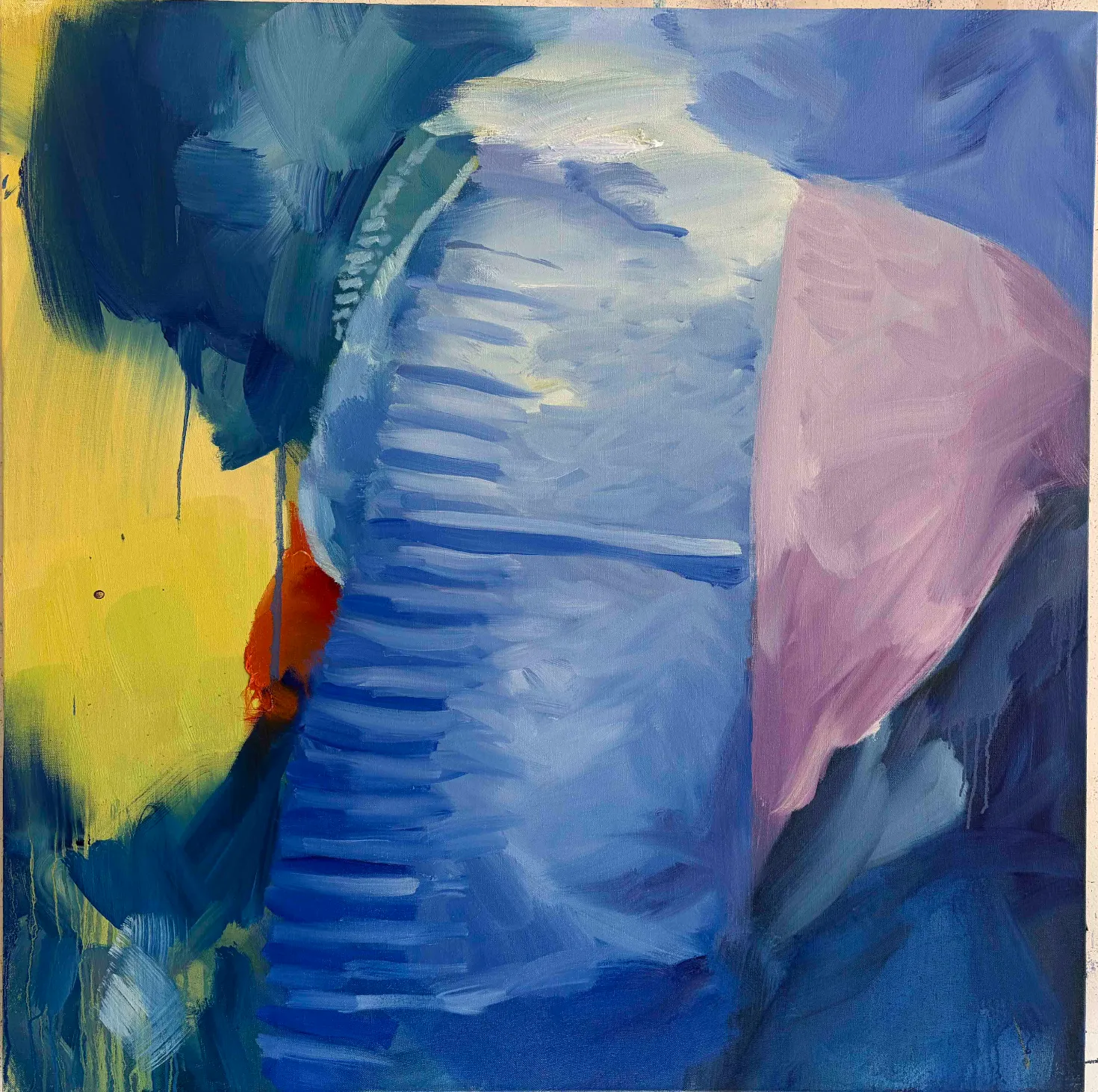
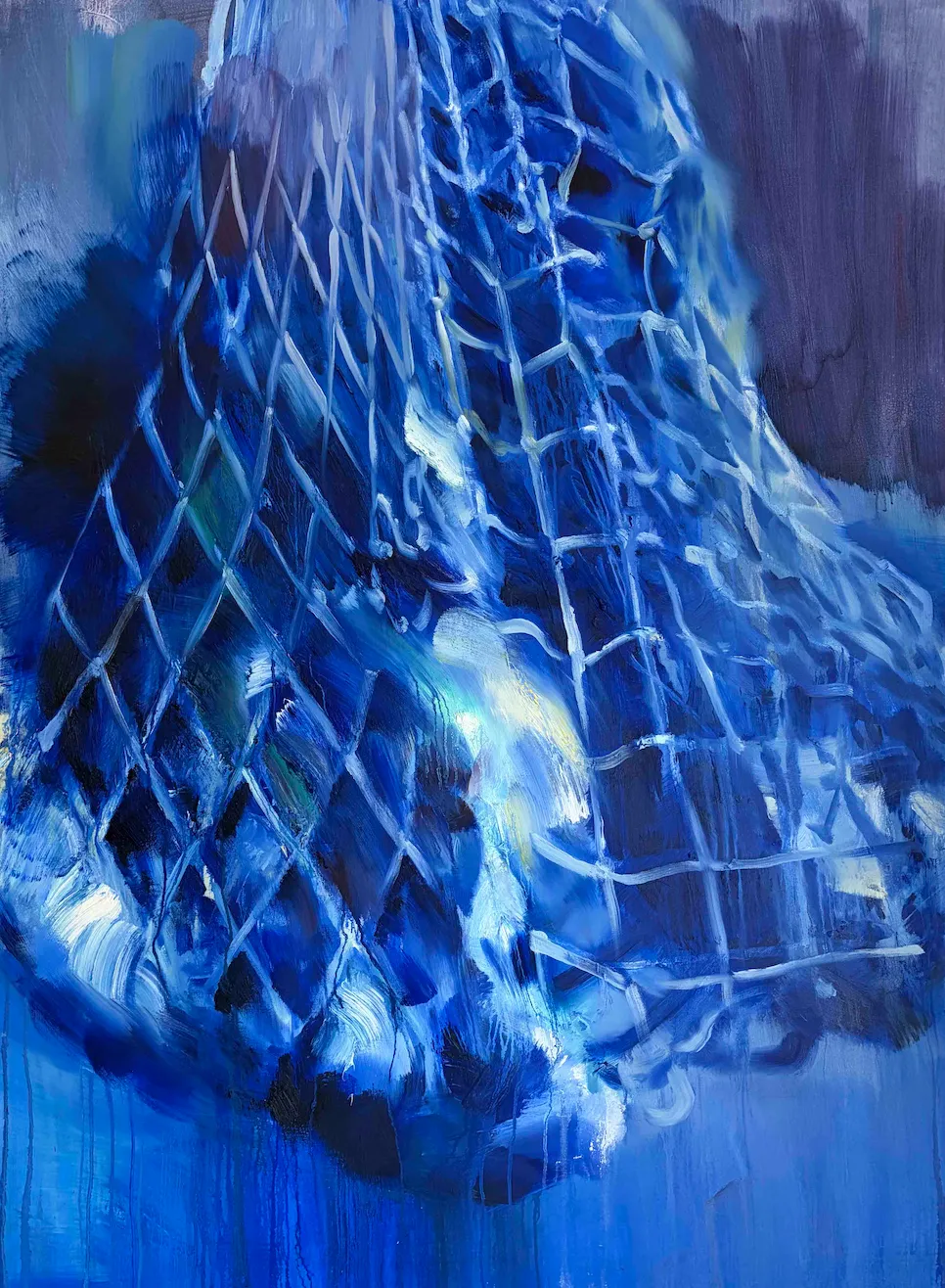
The paintings are records of a little girl’s existence within a spiritual realm. They capture the present moment of Estike, a child from an impoverished family. Not her story, not her fate, but simply the moment in which she exists. Brázdil neither explains nor comments. He paints a presence that looks back at us.
Tango, as a form, is not linear. It is a circle, a spiral that repeats itself. A repetitive cycle in which nothing is resolved and everything returns. Brázdil embraces this structure while searching for a fissure within it: a place where the child has not yet been entirely absorbed by the world surrounding her. A place where she still believes.
Estike believes in angels. She believes in a being that exists in a transitional, angelic state — something that does not entirely belong to this world, yet has not fully crossed into another. Her paintings record this spiritual space she carries within herself, even when the external world offers nothing to affirm its existence.
The theme of a child confronted with cruelty or the loss of innocence is deeply rooted in the history of art. Brázdil enters this tradition without offering consolation or a moral framework. The child in his paintings is not innocent in a sentimental sense; she becomes a mirror reflecting the power of adults, a power that presents itself as the natural order of the world.
A child enters the world with a certain purity. As adults, we bear responsibility for what we make of it — for what children become depends on us. This responsibility is never explicitly stated in the paintings. It is embedded within them. The viewer does not encounter it as a message, but as a feeling. Rather than being guided towards the question of what the paintings mean, we are invited to consider something far more intimate: what they make us feel.
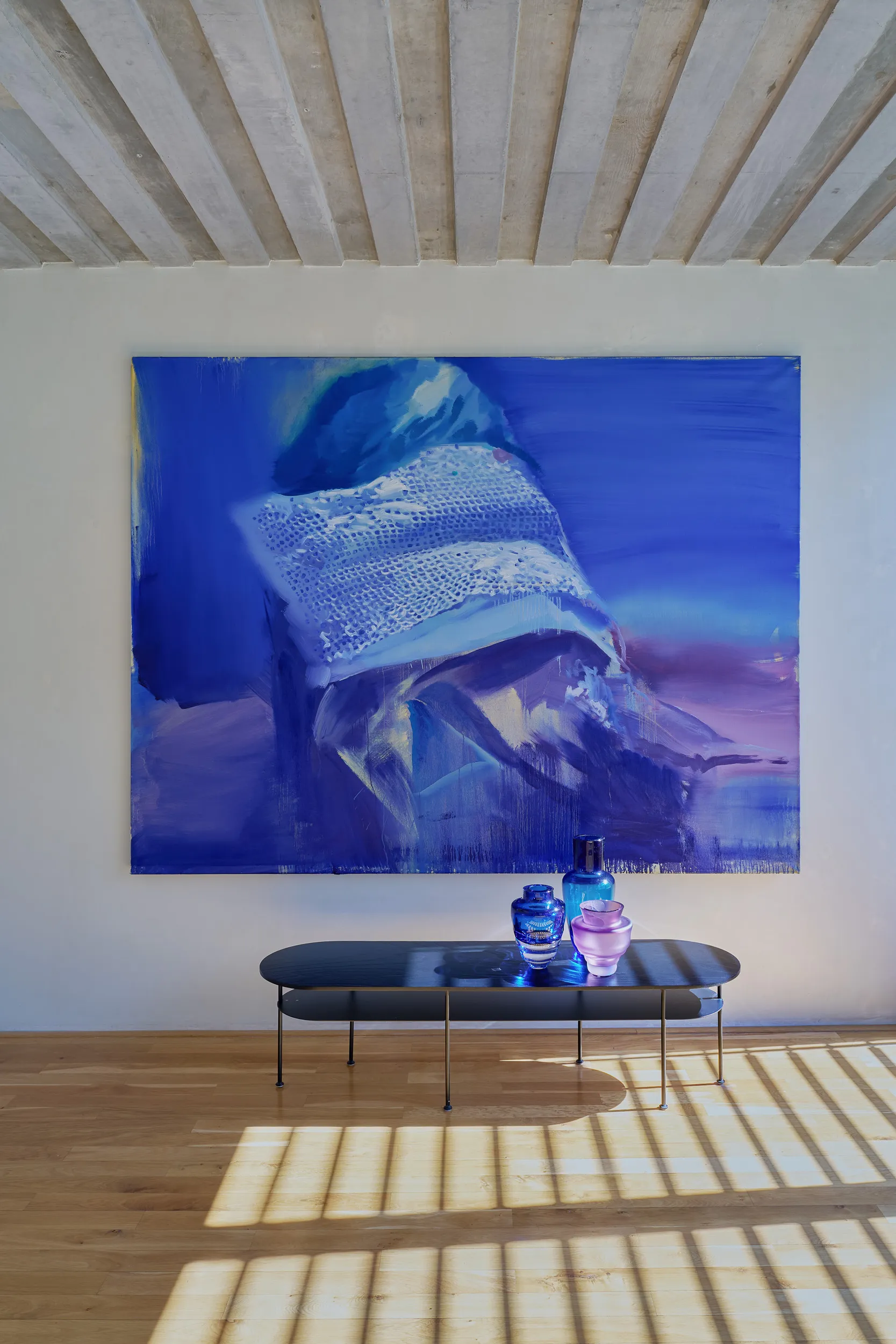
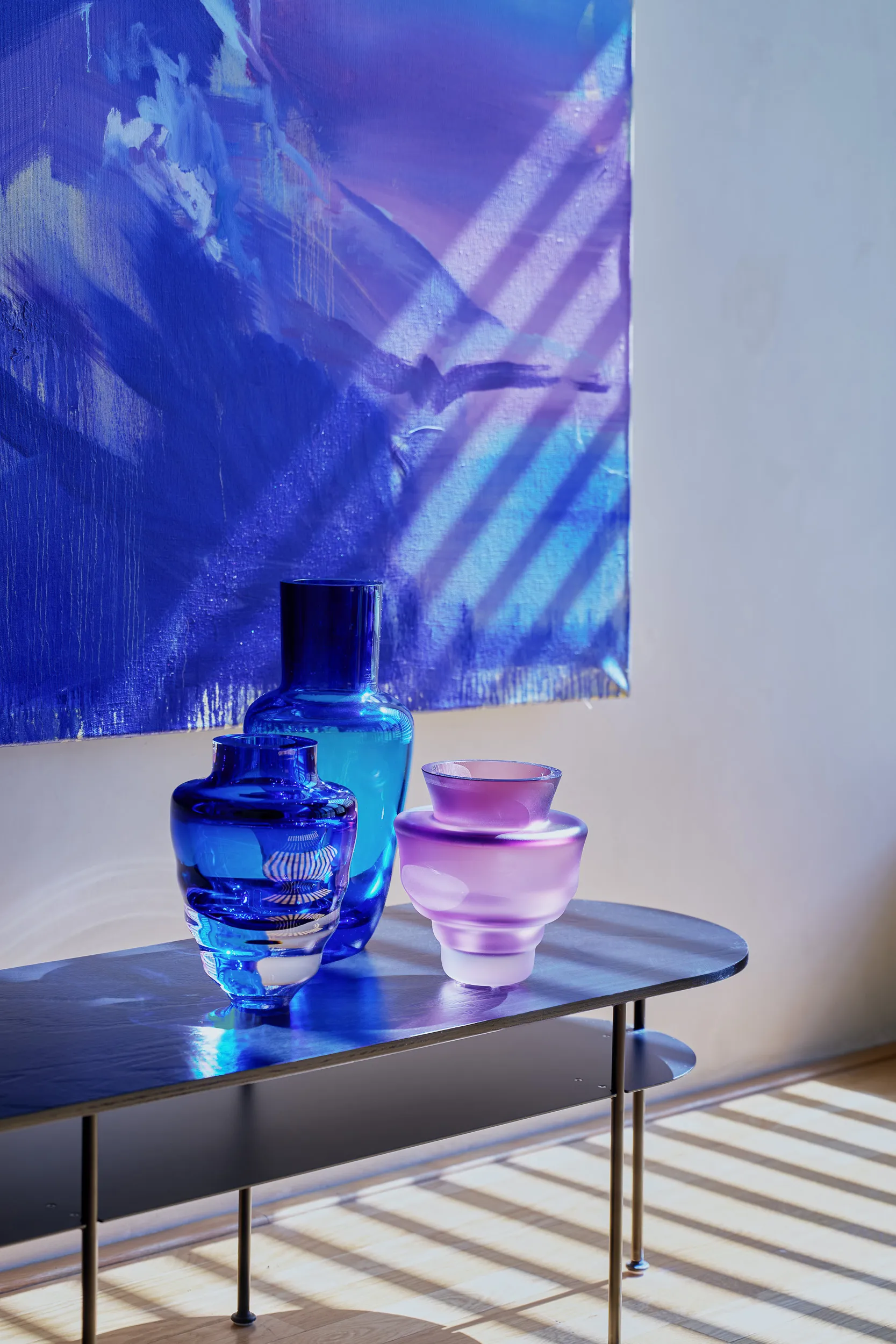
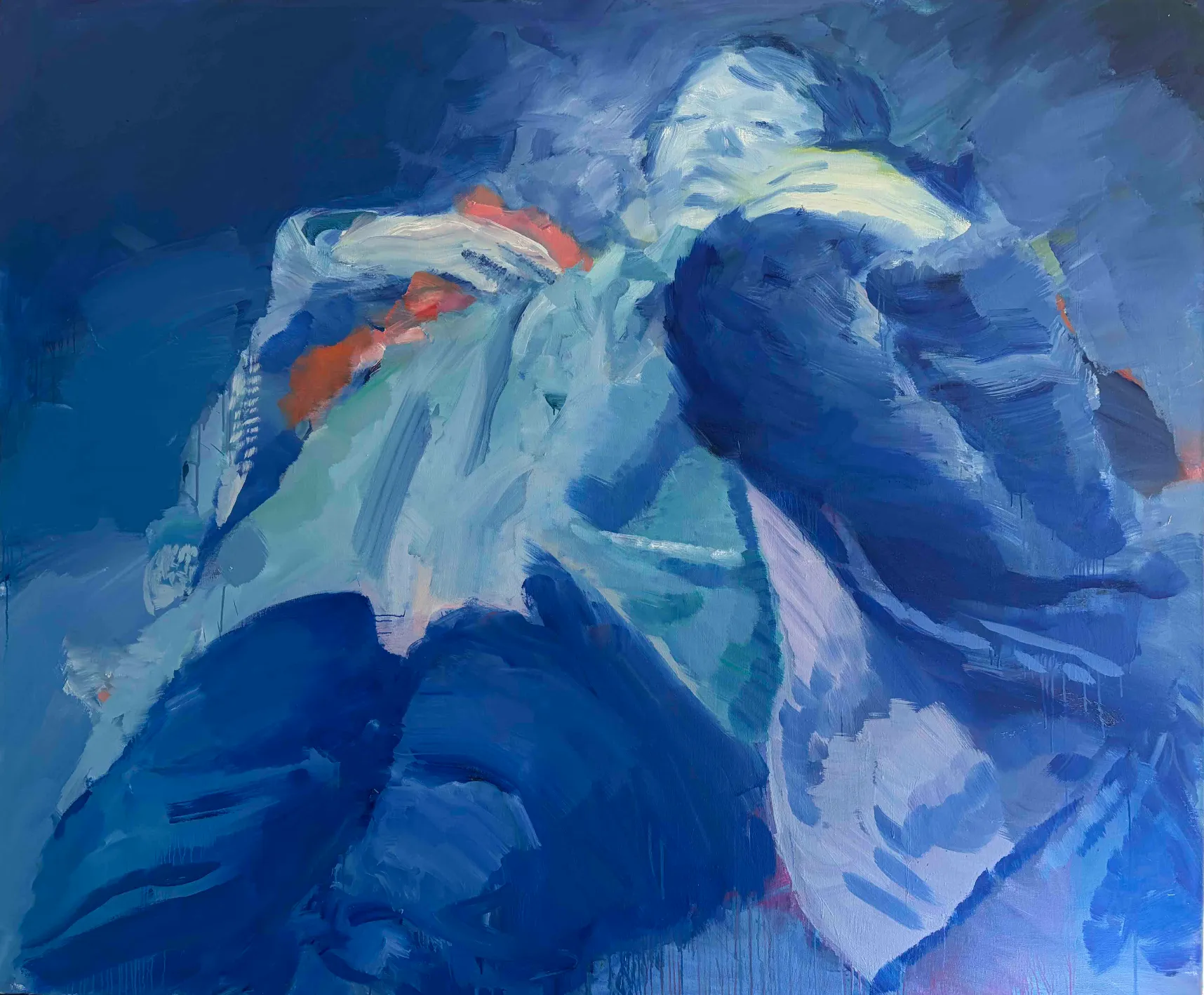
The blue that permeates the paintings is neither a colour of sadness nor of distance. It is the colour of a dreamlike vision, a reflection of what Estike believes in. It marks the threshold between reality and another world, between what is and what the child still allows herself to hope for.
A certain purity. Not as a quality, but as a direction in which she looks.
Brázdil creates a space, an invitation. He does not close it off with an interpretation. He leaves it open, allowing the viewer to decide what to make of it.


Aleš Brázdil
Text: Petr Vaňous
Aleš Brázdil is a prominent figure in contemporary Czech painting, where he explores the intersection of digital imagery, visual memory and the emotional force of painterly gesture. From 2003 to 2009, he studied at the Academy of Fine Arts in Prague, in the Painting IV studio specialising in traditional painting techniques, led by Professor Zdeněk Beran.
His practice draws on found visual fragments — reproductions, photographs and video stills — which he reinterprets through painting. His sources of inspiration span a wide range of cultural references, from music and horror aesthetics to themes of intimacy and eroticism. His work is characterised by an atmosphere of visual uncertainty, tension and latent unease, drawing the viewer into a space between reality and memory.
Brázdil has long been fascinated by images “trapped in time”: digital traces and forgotten moments that persist across the internet and social media. He sees these anonymous, often overlooked visual situations as “visual wrecks” awaiting rediscovery. It is from these fragments that new painterly narratives emerge.
His earlier work was defined by a darker, monochromatic palette, closely associated with the aesthetics of painting noir, characterised by subtle tonal transitions and the illusion of a blurred image. Over time, however, he has moved towards a more intense use of colour, bringing greater expressiveness, emotional depth and physical energy to his paintings. His precise, illusionistic approach has gradually evolved into a more visceral and gestural form of expression.
Aleš Brázdil’s works are held in significant public and private collections, including the National Gallery Prague and the Jana and Milan Jelínek Foundation. In 2019, an extensive monograph surveying his artistic practice to date was published as part of the Badokh Edition.